There is now an updated video on YouTube here. I did not show the dyeing step and it should be mentioned that after being in the dye, the anodized piece should be placed in boiling water to seal in the color. 25 September 2015.
Video and write up below:
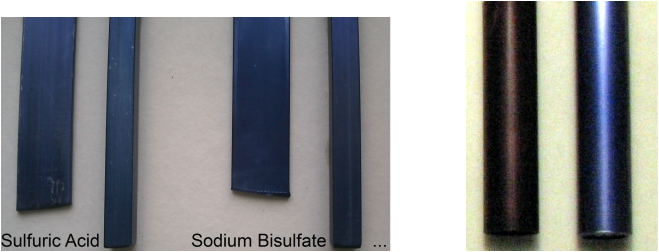
The anodizing and dying of aluminum parts at home has long been a popular project for many people. But the use of battery acid, typically (29% to 32% sulfuric acid) causes concern and reluctance, and prohibits others from even trying to anodize aluminum at home. It can be difficult to store, dangerous to skin and clothing, and in general, not fun to work with. OSHA lists it as corrosive. This project provides an alternative to the use of liquid sulfuric acid and uses instead, a granular pool chemical that is easy to find, mix, store, and work with. OSHA lists this chemical as only an irritant with no shipping restrictions. Disposal is straightforward using baking soda to neutralize and the results are comparable to those obtained with the use of the sulfuric acid method. The alternative chemical is sodium bisulfate (NaHSO4) the sodium salt of sulfuric acid but in weaker form. It is also known as sodium hydrogen sulfate and is used to lower the ph in home swimming pools. As in the use of any chemicals, care and caution are in order. The following video is a project overview followed by a step- by- step write-up:
Video and write up below:
The anodizing and dying of aluminum parts at home has long been a popular project for many people. But the use of battery acid, typically (29% to 32% sulfuric acid) causes concern and reluctance, and prohibits others from even trying to anodize aluminum at home. It can be difficult to store, dangerous to skin and clothing, and in general, not fun to work with. OSHA lists it as corrosive. This project provides an alternative to the use of liquid sulfuric acid and uses instead, a granular pool chemical that is easy to find, mix, store, and work with. OSHA lists this chemical as only an irritant with no shipping restrictions. Disposal is straightforward using baking soda to neutralize and the results are comparable to those obtained with the use of the sulfuric acid method. The alternative chemical is sodium bisulfate (NaHSO4) the sodium salt of sulfuric acid but in weaker form. It is also known as sodium hydrogen sulfate and is used to lower the ph in home swimming pools. As in the use of any chemicals, care and caution are in order. The following video is a project overview followed by a step- by- step write-up:
Aluminum and some other metals have a naturally occurring barrier coating that comes about because of a reaction with the oxygen in air. In the case of aluminum, that barrier is aluminum oxide, Al2O3. All processed aluminum has this coating. But, it has long been known that by using an electrolytic process the metal can have additional protection.
In general there are two types of barrier coatings. The first is a thin, hard coating that increases the hardness and insulation properties. The second is a porous cellular structure that allows a dye to fill in the cells and provides a decorative and protective coating. This is the structure that is needed for this project. After the dye has filled the anodized cells with color, the piece is placed in boiling water for 20 to 30 minutes to seal the dye in completely.
Required materials:
· Sodium Bisulfate, NaHSO4, also called Sodium Hydrogen Sulfate. The pool additive used is Aqua Chem balance+protects- pH down. I found this and similar products to lower pH in pools at both a garden center and the hardware store. Look for the chemical name and at least 90% active ingredient.
· Sodium Hydroxide. (Optional) NaOH also called drain cleaner or lye, available at all hardware stores.
· RIT liquid dye. I have used several colors but only in the liquid concentrated form. The dry packets may work but I have not tried them. Available in grocery, drug, and hardware stores.
· Battery or source of DC current. A 1.5 volt D cell can be used. I used a rechargeable 6 volt battery but a wall wart will also work well. This project likes relatively low voltage and current less than 400ma for these small parts. Slow anodizing seems to work best. Voltage and current guidelines for larger pieces will be listed in the closing comments.
· Aluminum or Lead for the cathode. (Negative Battery lead). Both are essentially inert in this chemical. Some aluminum will be deposited at the cathode but it can be removed easily.
· Aluminum metal to anodize.
Procedure:
Make a 2% (dilute) solution of sodium hydroxide (Drain Cleaner, NaOH) if you desire an etched surface prior to anodizing. 4 grams of NaOH in 196 ml of tap water. Or, ¾ cup water to 1 teaspoon NaOH. Mix with plastic or wood tongue depressor. Distilled water is best if you have some. This will be used to clean and prepare the aluminum surface. This measurement is not critical!
Make a 20 % solution of Sodium Bisulfate, (pool Ph down), also called sodium hydrogen sulfate. 40 grams of sodium bisulfate in 160 ml of tap water. Or, 2 and ½ Tablespoons sodium bisulfate to 2/3 cup water. Mix well with plastic or tongue depressor. Ph will be between 1 and 2. This can be increased up to 30% if needed.
Make the RIT dye solution. General guideline is 5 ml liquid dye with color of choice to 250 ml of water. Or, ½ Tablespoon dye to 1 cup water. This measurement is not critical and the concentration can be increased based on results.
Process:
Prepare the aluminum for anodizing by cleaning thoroughly. I typically use fine steel wool to remove the surface contaminants and reduce imperfections. This is followed by a wash with a Scotchbrite pad and dish detergent. Rinse well and either proceed to the sodium hydroxide etch for 2 to 3 minutes and rinse again, or go directly to the anodizing solution. The etch step provides some “bite” for the solution and allows for slightly larger cell size. Aluminum alloys are highly variable so experiments with scrap pieces are encouraged.
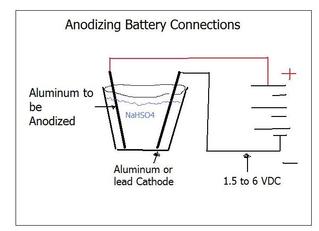
Attach the negative battery lead to the cathode which should be at least as large as the piece being anodized. Attach the positive lead to the piece to be anodized. Picture at end of post.
Small bubbles of hydrogen will be seen at the cathode. The time required for anodizing depends on alloy composition, current draw, solution temperature, and solution concentration. Start with 30 to 60 minutes. A good indicator is that the piece will have a slightly yellow tinge as the index of refraction changes with cell growth. Rinse the completed part in cold water and place in the dye bath at room temperature. Allow about 60 minutes and rinse the part in cold water. If the color density is low, place it back in the dye bath for a longer period.
When the color is correct, place the piece in boiling water for 20 to 30 minutes to seal in the dye. If a further protective coating is desired a clear coat of spray acrylic can be added to highlight the color.
For reference purpose, here is the formula that was used to anodize the control with the battery acid method. 50 ml of battery acid (30% H2SO4) , to 150 ml tap water.
Closing thoughts and link:
The current required for anodizing in general is very much a variable, but a guideline is 2.8 to 10 amps for one square foot of aluminum. This process is very open to experiment and optimization.
Two ideas that I have not tried yet is to raise the temperature of the anodizing solution, and the thought that it would be helpful to find a material to resist anodizing solution attack. I have tried Sharpie and Krylon clear acrylic spray with some fair results. Any ideas and comments would be appreciated.
The link for the Encyclopedia of Electrochemistry is here:
In general there are two types of barrier coatings. The first is a thin, hard coating that increases the hardness and insulation properties. The second is a porous cellular structure that allows a dye to fill in the cells and provides a decorative and protective coating. This is the structure that is needed for this project. After the dye has filled the anodized cells with color, the piece is placed in boiling water for 20 to 30 minutes to seal the dye in completely.
Required materials:
· Sodium Bisulfate, NaHSO4, also called Sodium Hydrogen Sulfate. The pool additive used is Aqua Chem balance+protects- pH down. I found this and similar products to lower pH in pools at both a garden center and the hardware store. Look for the chemical name and at least 90% active ingredient.
· Sodium Hydroxide. (Optional) NaOH also called drain cleaner or lye, available at all hardware stores.
· RIT liquid dye. I have used several colors but only in the liquid concentrated form. The dry packets may work but I have not tried them. Available in grocery, drug, and hardware stores.
· Battery or source of DC current. A 1.5 volt D cell can be used. I used a rechargeable 6 volt battery but a wall wart will also work well. This project likes relatively low voltage and current less than 400ma for these small parts. Slow anodizing seems to work best. Voltage and current guidelines for larger pieces will be listed in the closing comments.
· Aluminum or Lead for the cathode. (Negative Battery lead). Both are essentially inert in this chemical. Some aluminum will be deposited at the cathode but it can be removed easily.
· Aluminum metal to anodize.
Procedure:
Make a 2% (dilute) solution of sodium hydroxide (Drain Cleaner, NaOH) if you desire an etched surface prior to anodizing. 4 grams of NaOH in 196 ml of tap water. Or, ¾ cup water to 1 teaspoon NaOH. Mix with plastic or wood tongue depressor. Distilled water is best if you have some. This will be used to clean and prepare the aluminum surface. This measurement is not critical!
Make a 20 % solution of Sodium Bisulfate, (pool Ph down), also called sodium hydrogen sulfate. 40 grams of sodium bisulfate in 160 ml of tap water. Or, 2 and ½ Tablespoons sodium bisulfate to 2/3 cup water. Mix well with plastic or tongue depressor. Ph will be between 1 and 2. This can be increased up to 30% if needed.
Make the RIT dye solution. General guideline is 5 ml liquid dye with color of choice to 250 ml of water. Or, ½ Tablespoon dye to 1 cup water. This measurement is not critical and the concentration can be increased based on results.
Process:
Prepare the aluminum for anodizing by cleaning thoroughly. I typically use fine steel wool to remove the surface contaminants and reduce imperfections. This is followed by a wash with a Scotchbrite pad and dish detergent. Rinse well and either proceed to the sodium hydroxide etch for 2 to 3 minutes and rinse again, or go directly to the anodizing solution. The etch step provides some “bite” for the solution and allows for slightly larger cell size. Aluminum alloys are highly variable so experiments with scrap pieces are encouraged.
Attach the negative battery lead to the cathode which should be at least as large as the piece being anodized. Attach the positive lead to the piece to be anodized. Picture at end of post.
Small bubbles of hydrogen will be seen at the cathode. The time required for anodizing depends on alloy composition, current draw, solution temperature, and solution concentration. Start with 30 to 60 minutes. A good indicator is that the piece will have a slightly yellow tinge as the index of refraction changes with cell growth. Rinse the completed part in cold water and place in the dye bath at room temperature. Allow about 60 minutes and rinse the part in cold water. If the color density is low, place it back in the dye bath for a longer period.
When the color is correct, place the piece in boiling water for 20 to 30 minutes to seal in the dye. If a further protective coating is desired a clear coat of spray acrylic can be added to highlight the color.
For reference purpose, here is the formula that was used to anodize the control with the battery acid method. 50 ml of battery acid (30% H2SO4) , to 150 ml tap water.
Closing thoughts and link:
The current required for anodizing in general is very much a variable, but a guideline is 2.8 to 10 amps for one square foot of aluminum. This process is very open to experiment and optimization.
Two ideas that I have not tried yet is to raise the temperature of the anodizing solution, and the thought that it would be helpful to find a material to resist anodizing solution attack. I have tried Sharpie and Krylon clear acrylic spray with some fair results. Any ideas and comments would be appreciated.
The link for the Encyclopedia of Electrochemistry is here:
Thanks to all for the comments and the suggestions are always welcomed. If someone comes up with a good working example of a resist using this process, send a note via the comments and I will contact you and post the results as a guest post. For all that caught the use of "dying" instead of "dyeing" you are absolutely correct. My bad use of the English language. Apologies to all!
 RSS Feed
